Screening Plants
Need a bit of privacy? These fast-growing, leafy legends are perfect for screening out neighbours, fences, or just making your space feel more lush and enclosed.
54 products
Sort by:
54 products


Eucalyptus drummondii, or Drummond's gum, is a compact and elegant mallee making it an excellent choice for Perth gardens. Usually growing to 3-7m, it can be grown in a small garden or several planted to fill a sunny spot.
It features smooth, mottled bark and attractive, blue-grey foliage, complemented by creamy/white flowers that start blooming in spring. This species is well suited to Perth's sandy soils and climate, thriving in full sun and drought tolerant once established.
Compact and attractive, Eucalyptus drummondii is ideal for native gardens, habitat planting or as a feature tree.


Melaleuca viminea, also known as Mohan, is a graceful, weeping shrub or small tree (upto 10m) ideal for native gardens and landscape design. It's fine arching foliage, papery bark and creamy white bottlebrush flowers create a soft appearance, blooming in spring and summer.
Highly adaptable and fast growing. Its low maintenance needs, and is excellent for screening, and its ability to attract birds and other pollinators make it a standout choice for your property.


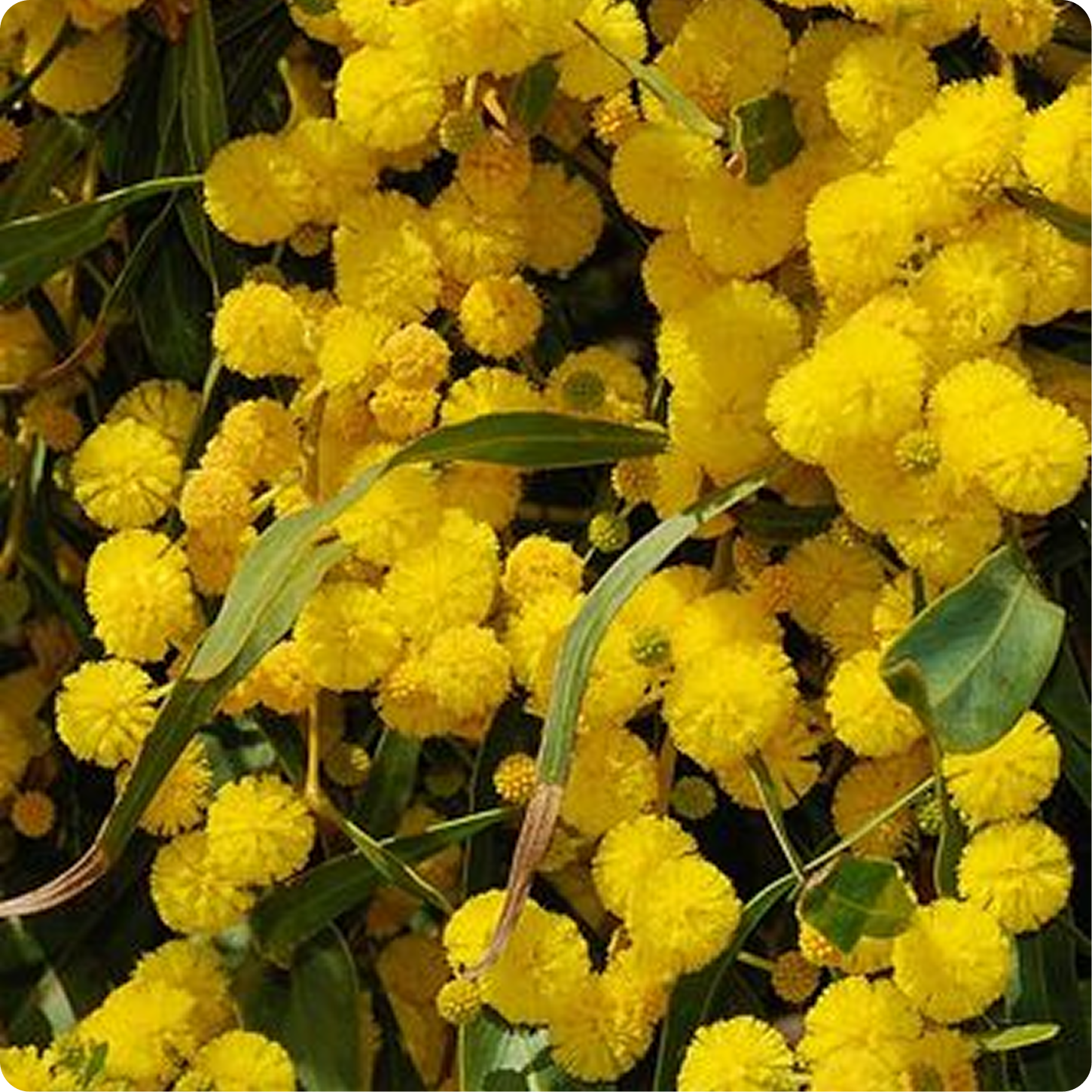
Discover the Glowing Wattle (Acacia celastrifolia), it has golden prolific flowers in late winter into spring, large round leaves and is found in all bush land and gardens in the Perth area.
Flourishing in sandy to gravelly soil types, its dense foliage and deep roots not only create a lush landscape but also support a sustainable environment.
The Glowing Wattle plays a crucial role beyond aesthetics. It serves as a good screening plant, enhances soil quality through nitrogen-fixation, and serves as a haven for wildlife.


Acacia daphnifolia has profuse yellow flowers in early winter, attracting pollinators. Adaptable to various soil types and pH levels, it's the perfect pick for anyone aiming to add a WA native plant into their garden.
Acacia daphnifolia roots enrich the soil by fixing nitrogen, fostering a healthier environment for all your garden's inhabitants. A medium shrub to 4 metres, it reshapes itself to fit its home, making any landscape design dream achievable.
You're also creating a haven for birds, pollinators, and other beneficial wildlife. Ideal for screening, wind protection and habitat corridors.

Melaleuca lateriflora, or commonly known as Gorada, is an erect, bushy shrub growing up to 4 metres, making it perfect for screening and creating habitat for wildlife.
It has many white flowers in heads up to 9cm, along its stems from September to January.
It has rough bark, oval shaped leaves and grows in sandy and clayey soils.

Melaleuca huegelii, or Chenile Honey-Myrtle, is a dense, medium shrub growing up to 5 metres. It has small leaves crowded against the stems and large white bottlebrush like flowers which attract many pollinators. Flowering occurs in early summer.

Templetonia retusa, or cockies tongues, is a multi-branched rounded shrub with grey green leaves and an up right habit, growing to 2 metres. It has large red pea-like flowers over a long time, seen in winter through to spring.
Templetonia retusa is an attractive and hardy plant that grows in a wide range of soil types along the coast line from Shark Bay into South Australia, including the Perth area.


The Swamp Paperbark, Melaleuca rhaphiophylla, is a fast growing native tree growing up to 10 metres. It has an attractive weeping habit, papery bark and lush, fragrant green foliage.
In spring and early summer it produces masses of creamy-white bottlebrush-like flowers that attract bees, birds and other pollinators. It also provides habitat and shelter for larger animals.
Naturally occurring along water courses and in seasonally wet areas, it thrives in moist to waterlogged soils but is adaptable once established. Great for screening, shelter belts, revegitation and in wet depressions.

Commonly known as Hummock Honey Myrtle, Melaleuca eleuterostachya is a medium shrub growing to 3 metres with arching branches, fibrous bark, narrow leaves and white brush-like flowers which occur through-out the year.


Casuarina obesa, or Swamp She-oak, is renowned for its resilience, thrives in various soil types and winter wet conditions, it features slender, weeping branchlets that resemble pine needles, while it's true leaves are reduced to tiny scales arranged in rings along the branchlets. Typically grows from 2 - 8 metres.
Ideal for screening and windbreaks, its adaptability to both drought and flooding makes it a reliable choice for challenging environments. It develops a dense, graceful habit that provides excellent habitat and shelter for wildlife.
Its rough, fissured bark and scale-like leaves provide a striking visual appeal, and whispering in the wind, while its small woody cones add a touch of nature's charm.


Acacia lasiocalyx, commonly known as the silver wattle is an open often weeping large shrub, growing into an attractive tree of 5 meters. It has long thin leaf-like foliage showing its weeping character. It has a large amount of flowers from late winter into spring with yellow wattle flowers.
The Silver wattle would work well in a screen habitat corridor, providing shelter and resources for birds and insects.


Melaleuca elliptica , also known as Granite Bottlebrush, is a neat hardy shrub that grows to 4m with showy bright red flower brushes starting in winter, and lasting for many months.
It has papery bark and ever green egg shaped foliage and is a great addition to your native garden. Its red flowers attract birds and pollinators, bringing life and colour into your space.

Agonis flexuosa, better known as peppermint tree, has long weeping branches and soft, narrow leaves that give off a subtle peppermint scent when crushed. White flowers are massed along the branches in spring and summer.
It's tough enough to cope with wind, sandy soils, and salty air, which makes it a favourite in coastal areas, but is adaptable to a range of climates and soils types. Growing up to 8 metres, it's a low-fuss option that brings movement, shade, and a bit of character to the space.


Medium multi-branched shrub or a small tree growing to 4 metres. A resilient, drought tolerant Acacia that is great for screening, supporting pollinators and inclusion in a habitat corridor.
Profuse yellow flowers cover Acacia burkittii in winter through to spring and it can be grown in a wide variety of soils. It has thin long phyllodes (leaves) which give it a wispy look.


A rounded, bushy shrub growing up to 3 metres. Masses of yellow flowers in spring and long seed pods that resemble a string of beads.
Fast growing, very hardy once established and provides great habitat and food for birds and pollinators. Ideal for screening and inclusion in a habitat corridor.


Eucalyptus redunca (subsp. redunca), or Black Marlock grows into a small mallee of 4 metres so perfect in a small garden. It has creamy yellow flowers from spring to summer which support all the pollinators.
The foliage of this eucalyptus is dull green and slightly blue. The buds are long , narrow and horn-shaped. it grows in sandy soils over laterite and coastal areas.


Acacia brumalis is a hardy, attractive acacia growing up to 3 metres. It produces dense foliage that offers shelter for birds and small wildlife, while providing masses of yellow flowers in winter and spring for bees and butterflies. Well-suited to many soil types, thrives in full sun and is drought tolerant once established.
A low maintenance, small bushy shrub perfect for native gardens, wind breaks and habitat.


Leptospermopsis erubescens, commonly known as the Roadside Teatree, is a shrub that usually grows to 2-3 metres. It has small egg shaped leaves and is covered in small white or pink flowers from late winter through spring.
It grows widespread over the whole southern west corner of WA, from Geraldton, Coolgardie and Esperance. It is drought tolerant, grows in various soil types , full sun and part shade.


Melaleuca lanceolata, commonly known as Rottnest Teatree, is a hardy, long-lives large shrub or small tree valued for its adaptability and attractive features. It typically grows from 3-8 metres, with dense, dark green foliage and papery bark. In summer, it produces masses of creamy white, bottlebrush-like flowers that attract bees, butterflies, and other pollinators.
Highly tolerant of coastal winds, salt spray, drought, and poor soils, Melaleuca lanceolata is ideal for windbreaks, screening and habitat planting, providing excellent shelter with a dense canopy for native wildlife.


Enhance your landscape with the Acacia sessilispica, a dense, rounded shrub native to Western Australia. Growing to 3 metres, its pungent green phyllodes and golden flowers create a vibrant display from August to September. This hardy plant thrives in granitic loam and sandy soils, making it a resilient addition to your garden.
The Acacia sessilispica's inflorescences are a visual delight, with sessile spikes densely covered in pale to dark golden flowers. Blooming in late winter to early spring, these yellow blossoms add a burst of colour to any outdoor space.
Ideal for shrubland and mallee communities, Acacia sessilispica is perfect for adding structure and visual interest to gardens. Its angular, glabrous branchlets and glossy black seeds offer a unique aesthetic, while its robust nature ensures it withstands various environmental conditions, making it a versatile choice for any garden design.
Showing 40/54
NextOur community @wildbosky