Bird & Bee Attracting
🐝 Bird & Bee Attracting 🦜
Bring your garden to life (literally). These native beauties are irresistible to local birds, bees and butterflies — perfect for creating a buzzing little ecosystem out back.
72 products
Sort by:
72 products


Eucalyptus kruseana, also known as the bookleaf mallee, is a unique and compact eucalyptus with striking silvery-blue, round foliage and decorative greenish yellow flowers. It grows as a straggly multi-stemmed mallee to 3.5m and has bark that sheds in ribbons. Adult leaves rarely form in the crown so it has only its juvenile leaves which give it it's unique character.
It has a sculptural form making it a favourite for florists and landscapers alike. Great in smaller gardens and easy to care for.


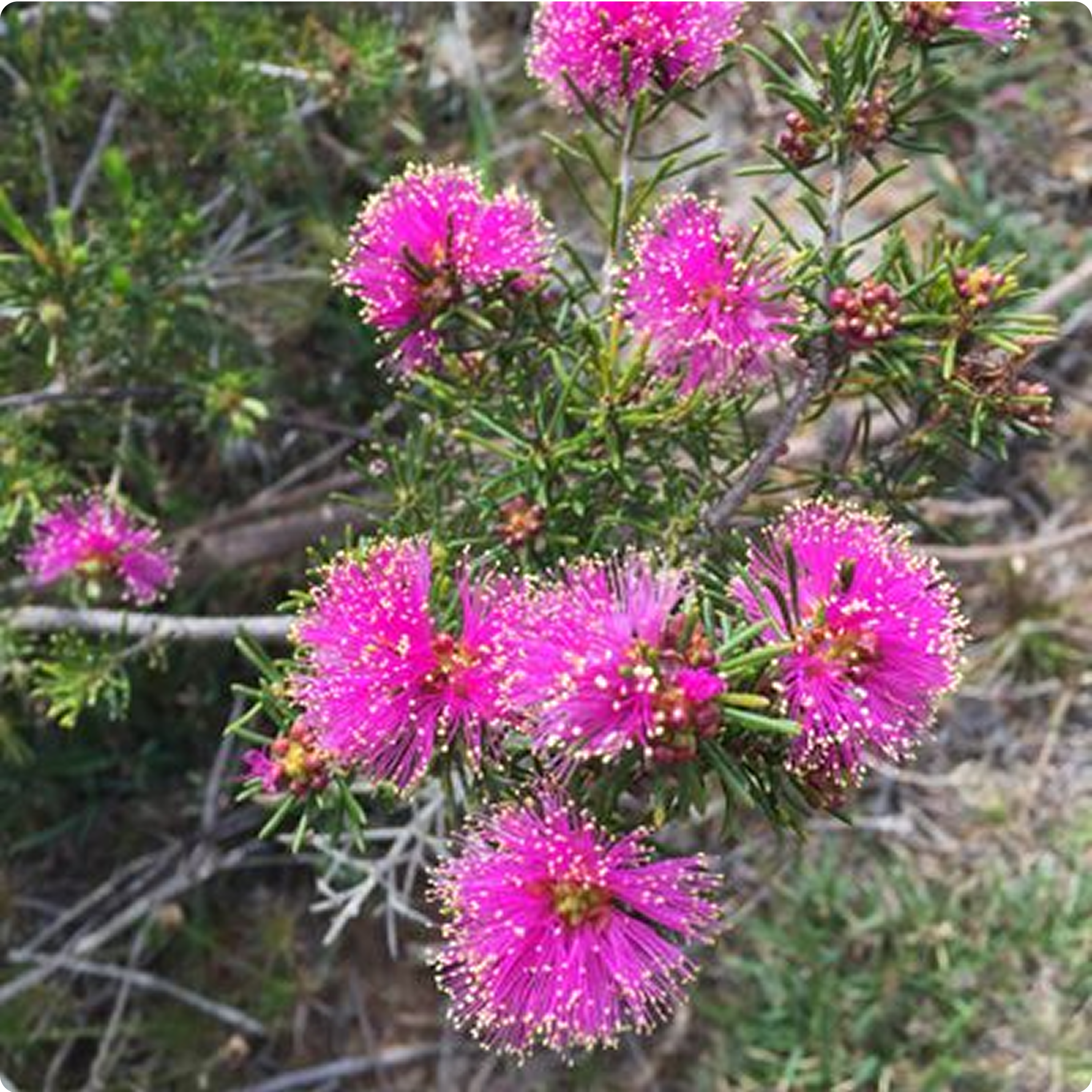
Melaleuca seriata is a compact, hardy shrub growing to 1 metre, that flowers generously through spring, producing masses of showy pink to purple bottlebrush-style blooms that are highly attractive to bees, butterflies and other pollinators.
Melaleuca seriata has fine, aromatic foliage and dense bushy form perfect for native gardens.


Discover the splendid Crimson Kunzea (Kunzea baxteri), a natural spectacle. Ideal for stand alone displays or screening, it's your tool for transforming any space into an enchanting landscape.
Kunzea baxteri flourishes in well-drained soils, full or partly shady position, perfect for Perth environments. Beyond its visual appeal, it promotes environmental well-being, fitting effortlessly into your garden.
Grows to 3m erect shrub, grey-green foliage and crimson profuse flowers clustered in 'bottlebrush' arrangement.

Bring vibrant colour and native charm to your garden with Kunzea recurva, sometimes known as purple kunzea, with eye-catching purple/pink blooms and gracefully curved foliage. Perfect for low maintenance landscaping, this hardy plant thrives in Perth's poor soils and dry conditions, making it ideal for water-wise gardens. Grows to 2 metres.
Its dense, compact growth habit adds structure and texture, while the profusion of springtime flowers attracts bees and other beneficial pollinators. It's resilience and ornamental appeal make it a popular choice for native gardens and ecological restoration projects.

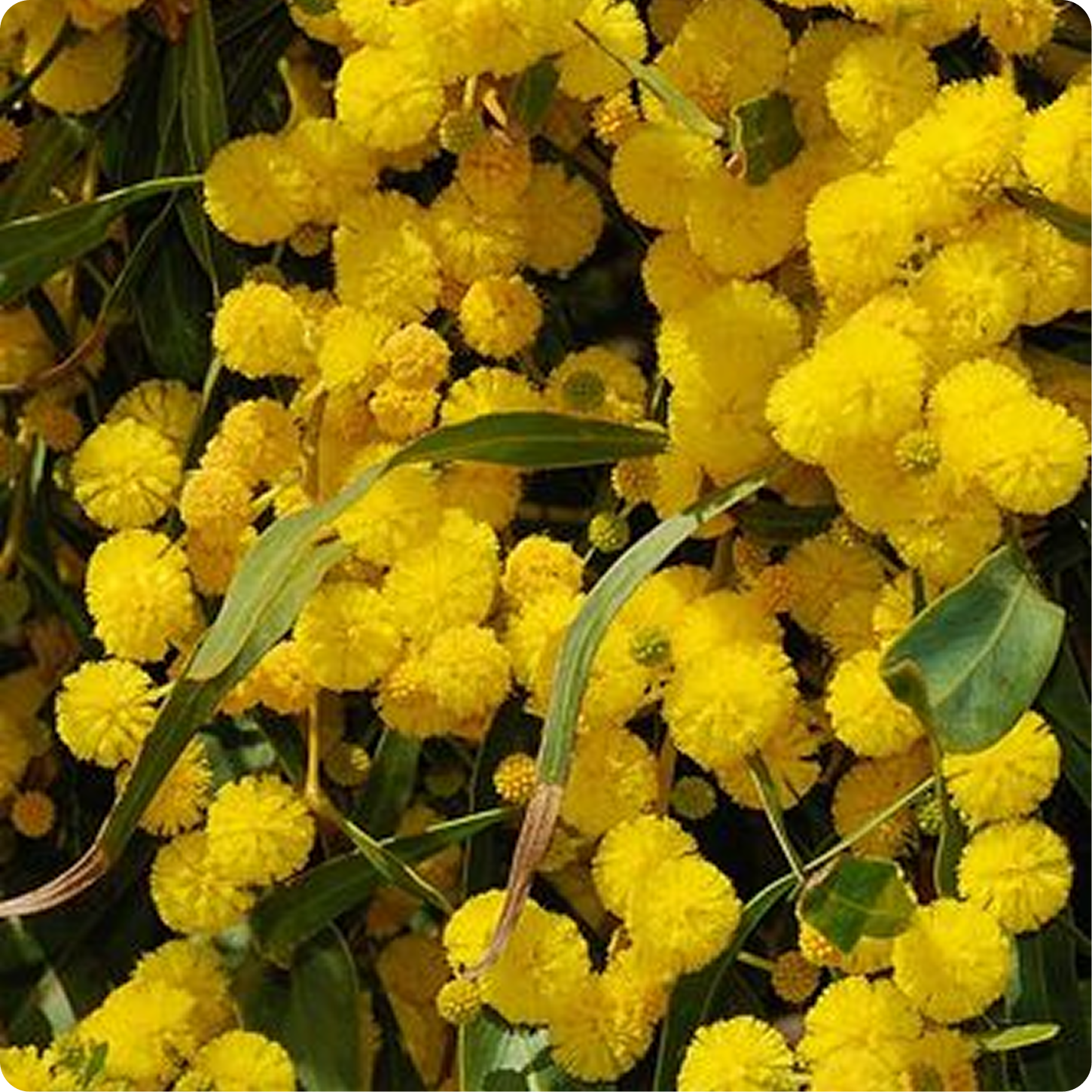
Orange wattle, known as Acacia saligna, with its striking golden-yellow blooms, embodies the essence of the WA landscape. Renowned for quick growth and ability to thrive in many soil types. This versatile plant excels in various roles—beautifying gardens, nitrogen fixing, and supporting local birds and animals. Its drought resistance and minimal care requirements make it a favourite among gardeners.
In gardens, Orange Wattle becomes a hub of activity, attracting pollinators like bees and butterflies, thus promoting biodiversity. This plant not only enhances garden visuals but also contributes significantly to ecological balance, making it an invaluable addition to any outdoor space.
It grows as a small, dense tree with a short trunk and weeping habit, eventually growing up to 8m. Large amounts of yellow flowers appear late winter.


Melaleuca trichophylla is a low, spreading bushy shrub to a height of 1 metre, and flowers profusely in Spring with pink/purple (sometimes deep red) pom pom flowers with bright yellow tips (anthers).
Grows from Geraldton down to Dunsborough including the Perth area.


Hypocalymma angustifolium, or white myrtle is a multi-stemmed, fine leaved dense shrub growing up to 1.5 metres. It should be positioned in a part shade location protected from sun and wind.
It has prolific white or pink flowers along it's stems from June to October, attracting birds and bees.
It naturally found from Geraldton across the south west corner to Albany, in sandy, clayey, peaty soils, and can be in a winter wet area.


Eucalyptus erythrocorys, commonly known as red-capped gum, or illyarrie, is a striking small tree, growing from 4-8 metres, known for it's red caps and bright yellow flowers seen from late summer through to autumn.
Eucalyptus erythrocorys is popular in Perth gardens and hills properties because of it's ornamental features and ability to attract birds and other pollinators. It loves well-drained soils and sunny positions.


Enhance your garden with the Grass-leaf Hakea (Hakea multilineata). This striking plant is perfect as a feature in mixed native landscapes, showcasing vibrant pink flowers and attractive foliage. Growing to 3-5m.
Create a natural screen or shelter with the Grass-leaf Hakea. Ideal for parks and reserves, this plant forms a dense barrier that provides privacy and protection. Its well-drained soil requirement ensures it thrives with minimal fuss, making it a reliable choice for diverse landscapes.
This plant attracts nectar-eating birds and insects, enriching your garden's ecosystem. Its flowering period offers a continuous food source for native wildlife, like nectar loving birds while the seeds are eaten by black cockatoos.


Melaleuca diomisifolia, also known as green honey-myrtle, is a dense, evergreen shrub mainly found in our south-west.
It is notable for its vibrant lime-green bottlebrush flowers, which bloom mainly in spring and attract a variety of pollinators, including bees and birds.
This melaleuca grows up to 2 metres tall and features small, aromatic leaves arranged in a spiral pattern along it's stems.
Its hardiness and unique colouration contribute to its appeal for ornamental gardens as well as native landscaping.


Transform a garden corner into a vibrant display with the Melaleuca radula also known as Graceful Honey Myrtle. This small shrub (1-2m) has evergreen leaves and brush-like flowers that span from pink or purple.
The plant attracts bees, butterflies, and birds with its nectar-rich flowers, enriching local wildlife. It’s found in all bushland around the Perth area and north to Geraldton.
Thriving in various soil types and requiring little water once settled, the Graceful Honey Myrtle flourishes in both full sun and partial shade. Its drought tolerance and adaptability to different soils make it a low-maintenance yet stunning garden addition, ensuring year-round allure.

Grevillea 'Gin Gin Gem' is a hardy, fast-growing shrub that is a ground cover, 1 metre high but has a spread of 3 metres. It prefers a sunny position but can tolerate shade also.
'Gin Gin Gem' has a long flowering time, from Winter through to Spring, with lots of small red spider-like flowers, which are highly attractive to nectar feeding birds.


Banksia nivea, or Honeypot Dryandra, is a rounded, many branched shrub reaching 1 metre dome. It has long leaves with triangular lobes along the mid vein, a classic Banksia look, but the most striking part of this Banksia is its flowers. They are described as heads of cream-coloured and orange or red flowers, with many forming on every shrub.
Flowering starts between Autumn and Spring, and are highly attractive to nectar feeding birds. Prefers full sun but can tolerate part-shade.
Found from Geraldton down to Esperance.

Melaleuca pauciflora is a dense, impenetrable, bushy rounded shrub growing to 1.5 metres.
It grows along the coast from Geraldton to Esperance in a range soils including winter-wet areas, it's also shade tolerant.
It has profuse small white flowers from Summer into Autumn which attract pollinators and birds. It's dense nature makes it great habitat.


Hakea lissocarpha, or honey bush has prickly foliage and masses of sweetly scented flowers. It forms a dense, rounded habit that provides excellent habitat and shelter for birds and other wildlife.
It grows from 1-3 metres and flowers prolifically from winter through spring, with clusters of white flowers growing along the stems, often attracting pollinators with it's rich nectar.
Well adapted to a variety of soils, well-draining and dry conditions, also drought tolerant once established. It's common to find from Geraldton down to Esperance.


Enchylaena tomentosa, also known as barrier saltbush, is a hardy, low maintenance native shrub perfect for tough conditions, thriving in many soil types, coastal areas and dry landscapes. Growing to 0.5-1m, barrier saltbush is resilient and adds great habitat value to your garden.
It's soft green foliage is complemented by vibrant red and golden berries which attract birds and wildlife to your space. Barrier saltbush is ideal for groundcover, erosion control and habitat.


The Jam Wattle, Acacia acuminata, is a hardy, fast growing small tree up to 3 metres. Common around Perth and a part of our natural landscape.
Thriving in well-drained soils, including gravelly and loamy types, also drought tolerant.
It's timber has a raspberry jam like aroma when cut, which is where it's common name comes from. It is also well known for its golden yellow, rod shaped flowers in late winter to spring.
It plays a crucial role in supporting local biodiversity, especially a specific mistletoe that attracts mistletoe birds, bees, and butterflies, turning gardens into lively ecosystems.


Hakea petiolaris, or sea-urchin hakea, is a commonly seen hakea in the Perth hills bushland. It is a distinctive small tree (6m) with board leaves, open branches, woody seed pods and large pink/purple sea urchin-like flowers. Flowers mainly in winter to spring attracting pollinators to your garden.
Great addition to you native garden, adding height and texture, while enhancing local biodiversity.


10 Perth local native plants
This mix includes 10 native WA species that grow between 1 and 3 metres tall. It’s ideal for creating habitat, shelter and food for birds and insects, also rewilding your garden. The selection supports local birds, bees, and other pollinators.
What’s included:
- 10 plants, grown in biodegradable coir pots (ready to be planted)
- Most species are native to the Perth hills & surrounds
- Plants are suited to local soils and dry summers
- Selected for habitat value, resilience, and varied flowering seasons
Why native plants?
Local natives need less water once established, less fertiliser, and help restore ecological balance. They’re a low-maintenance way to build biodiversity into your space.
What varieties are included?
Melaleuca radula (graceful honey myrtle), Melaleuca lateritia (robin redbreast), Melaleuca diosmifolia (green honey myrtle), Kunzea baxteri (crimson kunzea), Kunzea recurva (purple kunzea), Acacia celastrifolia (grey myrtle wattle), Acacia brumalis, Acacia trigonophylla, Acacia hemiteles, Calothamnus gilesii, Calothamnus rupestris (mouse ears), Atriplex semibaccata (creeping saltbush), Eremaea pauciflora (orange eremaea), Hypocalymma angustifolium (white myrtle), Enchylaena tomentosa (barrier saltbush)


Acacia stenoptera, narrow winged wattle, is a very common Acacia seen around the south-west corner of WA, from Geraldton down to Albany. It is a scrambling, sprawling and prickly shrub reaching 1m. It is an understory plant.
This acacia has ridged stems and curved spine tipped phyllodes that form a wing along the stems. This provides great habitat for many birds and insects. It has creamy yellow flowers from March to December.
Showing 20/72
NextOur community @wildbosky