Quick Growing Natives
Short on patience? We get it. These WA natives are known for their get-up-and-grow attitude. Perfect if you want cover, colour, or height in a hurry.
33 products
Sort by:
33 products

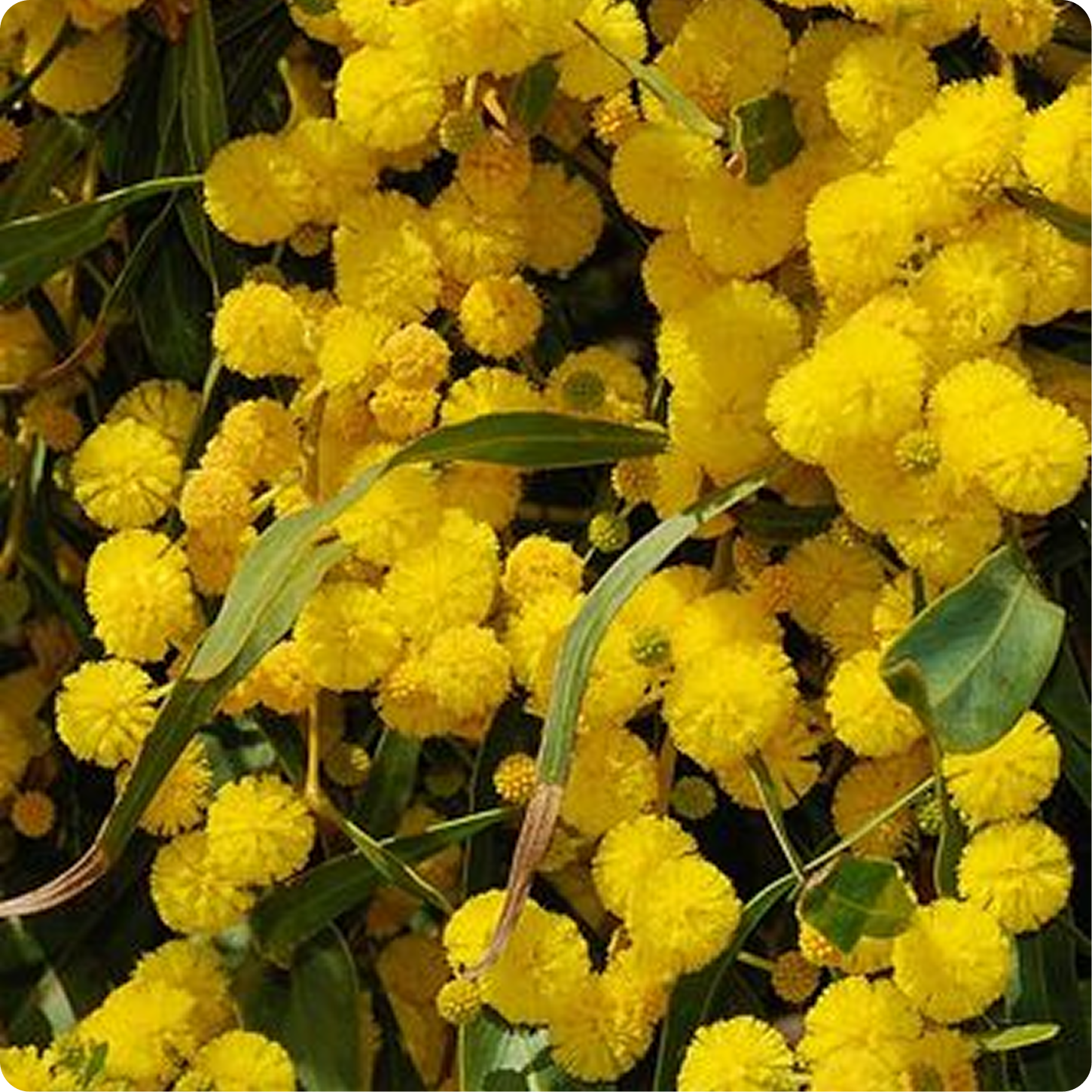
Orange wattle, known as Acacia saligna, with its striking golden-yellow blooms, embodies the essence of the WA landscape. Renowned for quick growth and ability to thrive in many soil types. This versatile plant excels in various roles—beautifying gardens, nitrogen fixing, and supporting local birds and animals. Its drought resistance and minimal care requirements make it a favourite among gardeners.
In gardens, Orange Wattle becomes a hub of activity, attracting pollinators like bees and butterflies, thus promoting biodiversity. This plant not only enhances garden visuals but also contributes significantly to ecological balance, making it an invaluable addition to any outdoor space.
It grows as a small, dense tree with a short trunk and weeping habit, eventually growing up to 8m. Large amounts of yellow flowers appear late winter.


Hakea petiolaris, or sea-urchin hakea, is a commonly seen hakea in the Perth hills bushland. It is a distinctive small tree (6m) with board leaves, open branches, woody seed pods and large pink/purple sea urchin-like flowers. Flowers mainly in winter to spring attracting pollinators to your garden.
Great addition to you native garden, adding height and texture, while enhancing local biodiversity.


A perennial (grows back for several years) native grass reaching 60cm tall. Lovely long leaves and purple seed heads flowering often. Native grasses are an important part of the food chain for native animals and insects, they provide direct food, shelter, life cycle support and host plants.
If one grass sets seed, more grasses will grow every year.


Common Wallaby Grass, Rytidosperma caespitosum, is a native tufted grass that reaches up to 90cm. It is a deep-rooted winter growing grass, improving soil structure. It can tolerate a wide range of soil types and diverse habitats.
Native grasses provide habitat for local insects, supporting butterflies and other pollinators throughout their life cycles. The seed heads provide food for birds. They also offer shelter and nesting material for small birds and reptiles.

Grevillea 'Gin Gin Gem' is a hardy, fast-growing shrub that is a ground cover, 1 metre high but has a spread of 3 metres. It prefers a sunny position but can tolerate shade also.
'Gin Gin Gem' has a long flowering time, from Winter through to Spring, with lots of small red spider-like flowers, which are highly attractive to nectar feeding birds.


The Jam Wattle, Acacia acuminata, is a hardy, fast growing small tree up to 3 metres. Common around Perth and a part of our natural landscape.
Thriving in well-drained soils, including gravelly and loamy types, also drought tolerant.
It's timber has a raspberry jam like aroma when cut, which is where it's common name comes from. It is also well known for its golden yellow, rod shaped flowers in late winter to spring.
It plays a crucial role in supporting local biodiversity, especially a specific mistletoe that attracts mistletoe birds, bees, and butterflies, turning gardens into lively ecosystems.


Hakea lissocarpha, or honey bush has prickly foliage and masses of sweetly scented flowers. It forms a dense, rounded habit that provides excellent habitat and shelter for birds and other wildlife.
It grows from 1-3 metres and flowers prolifically from winter through spring, with clusters of white flowers growing along the stems, often attracting pollinators with it's rich nectar.
Well adapted to a variety of soils, well-draining and dry conditions, also drought tolerant once established. It's common to find from Geraldton down to Esperance.


Enchylaena tomentosa, also known as barrier saltbush, is a hardy, low maintenance native shrub perfect for tough conditions, thriving in many soil types, coastal areas and dry landscapes. Growing to 0.5-1m, barrier saltbush is resilient and adds great habitat value to your garden.
It's soft green foliage is complemented by vibrant red and golden berries which attract birds and wildlife to your space. Barrier saltbush is ideal for groundcover, erosion control and habitat.


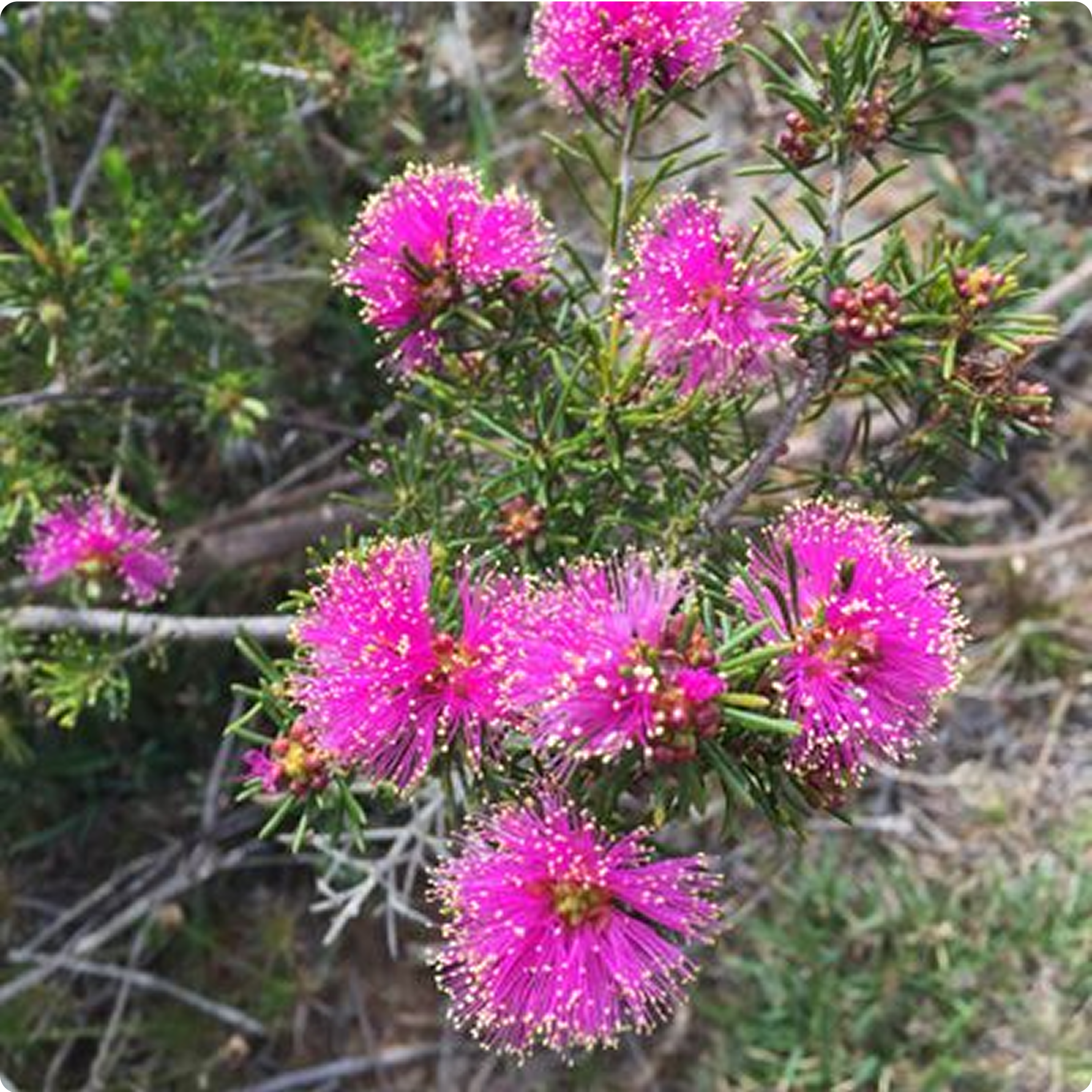
Melaleuca nesophila commonly known as Showy honey-myrtle because of it's long flowering time with beautifully pink to purple pom-pom flowers. Attractive ever-green aromatic foliage growing up to 4 metres.
A native that ticks all the boxes in terms of providing resources for birds and insects, while adding beauty into your garden. The showy honey-myrtle is also used for screening.


Kunzea glabrescens, also known as spearwood, is a stunning and hardy medium shrub (2-4m) that makes a striking addition to your garden. With its fine, aromatic foliage and soft yellow bottlebrush like flowers that bloom in spring, it attracts pollinators like bees and butterflies.
Naturally found in the Perth and surrounding areas, it thrives in well drained soils and adapts well to coastal or inland conditions.
Ideal for native landscaping, screening, erosion control, Kunzea glabrescens offers low-maintenance beauty and ecological benefits.

Old Man Saltbush, Atriplex nummularia, is a dense, sprawling shrub with large attractive silver foliage. It is the largest species of Australian saltbush growing up to 2 metres high and 3 metres wide, perfect for screening and habitat. It has a extensive deep root system which stabilises sandy soils, but can tolerate many soil types.
It naturally occurs in arid areas in all states of Australia (except Tasmania), so is very hardy and tolerant of most conditions once established.
It can be pruned to keep in shape, must have free draining soils and is part-shade tolerant.


Kennedia prostrata, or running postman, is a prostrate, scrambling groundcover known for it's vivid scarlet-red pea flowers which are on display from winter through to spring, and the fruit is a flattened cylindrical pod.
The plant features soft green, trifoliate leaves and long trailing stems that can spread several metres, making it ideal for covering banks, suppressing weeds, or cascading over retaining walls.
Adaptable to a range of well-draining soils, Kennedia prostrata is shade-tolerant and is found from Geraldton to Esperance.


Acacia stenoptera, narrow winged wattle, is a very common Acacia seen around the south-west corner of WA, from Geraldton down to Albany. It is a scrambling, sprawling and prickly shrub reaching 1m. It is an understory plant.
This acacia has ridged stems and curved spine tipped phyllodes that form a wing along the stems. This provides great habitat for many birds and insects. It has creamy yellow flowers from March to December.


Acacia denticulosa, or Sandpaper wattle, because of it's slightly twisted, sandpaper-like textured foliage. It is also known for its yellow flowers, which are many small flowers arranged in a curved rod-like inflorescence about 6cm long. Flowering occurs in spring, (even after the first year of growing),which attract pollinators such as bees, butterflies and birds to your garden.
It's fast growing up to 3 metres, fixes nitrogen in your soil, tolerates partial shade but prefers full-sun and is drought tolerant.
Acacia denticulosa is an unusual acacia which is threatened in the wild, but with a growing interest from native gardeners it's been seen in local gardens.


Beyond its beauty, the Tall Saltbush offers a feast for honeyeaters with its red berries.
Perfect for under-canopy growth, the Tall Saltbush shows remarkable adaptability. It flourishes beneath taller trees. This low-maintenance shrub is well-suited to erosion control, habitat restoration, low-water landscaping while supporting local wildlife.


Acacia meisneri, commonly known as the Blue Wattle. This eye-catching plant features vibrant yellow flowers and distinctive bluish-green foliage. Blooming in late winter to early spring, it's timed perfectly to attract pollinators and brighten your garden.
The Blue Wattle thrives in a variety of soil types, from sandy to loamy. It adapts easily, fast growing either as a small, charming tree or a dense, multi-stemmed shrub.
Acacia meisneri improves environmental health and beautifies spaces. It fixes nitrogen in the soil, its drought resistance also makes it suitable for landscaping, promoting a sustainable, water-efficient garden. Whether used as a natural screen or a decorative hedge, the Blue Wattle serves a dual purpose, enhancing both garden aesthetics and ecosystem health.


Acacia cyclops, commonly known as coastal wattle or red-eyed wattle, is a hardy dome shaped shrub mostly found in coastal regions. It usually grows to a height of 4 metres but can get taller.
Its easily recognised by its bright yellow flowers, which are produced over a long time, from winter up until summer, and distinctive seed pods filled with seeds surrounded by a fleshy red aril - hence the name 'red-eyed'.
Acacia cyclops loves Perth sandy soils, where it is valued for its resilience and ability to improve soil fertility through nitrogen fixation.


Acacia lasiocalyx, commonly known as the silver wattle is an open often weeping large shrub, growing into an attractive tree of 5 meters. It has long thin leaf-like foliage showing its weeping character. It has a large amount of flowers from late winter into spring with yellow wattle flowers.
The Silver wattle would work well in a screen habitat corridor, providing shelter and resources for birds and insects.


The Swamp Paperbark, Melaleuca rhaphiophylla, is a fast growing native tree growing up to 10 metres. It has an attractive weeping habit, papery bark and lush, fragrant green foliage.
In spring and early summer it produces masses of creamy-white bottlebrush-like flowers that attract bees, birds and other pollinators. It also provides habitat and shelter for larger animals.
Naturally occurring along water courses and in seasonally wet areas, it thrives in moist to waterlogged soils but is adaptable once established. Great for screening, shelter belts, revegitation and in wet depressions.


Melaleuca lanceolata, commonly known as Rottnest Teatree, is a hardy, long-lives large shrub or small tree valued for its adaptability and attractive features. It typically grows from 3-8 metres, with dense, dark green foliage and papery bark. In summer, it produces masses of creamy white, bottlebrush-like flowers that attract bees, butterflies, and other pollinators.
Highly tolerant of coastal winds, salt spray, drought, and poor soils, Melaleuca lanceolata is ideal for windbreaks, screening and habitat planting, providing excellent shelter with a dense canopy for native wildlife.
Showing 20/33
NextOur community @wildbosky