Quick Growing Natives
Short on patience? We get it. These WA natives are known for their get-up-and-grow attitude. Perfect if you want cover, colour, or height in a hurry.
33 products
Sort by:
33 products


Melaleuca cardiophylla, also known as Tangling Melaleuca, is a charming and resilient WA native shrub that brings year-round interest to any garden. With its slightly prickly, heart shaped foliage and profusion of creamy white flowers in spring and summer, it creates a visual display while attracting birds, bees and beneficial insects.
Naturally suited to sandy and gravely soils, this hardy species thrives in full sun and tolerates drought, coastal conditions, and light frosts. It is a dense, spreading shrub growing to 2m.
Perfect for native gardens, screening, hedging and habitat for local fauna.


Erect, compact shrub growing to 2.5 metres, the Robin redbreast bush, or Melaleuca lateritia, has soft, narrow green foliage and thrives in sandy well-drained soils. Admired for its reddish orange bottlebrush flowers that bloom from spring through summer, which often attract nectar-loving birds like honeyeaters.
It grows in the Perth area and surrounds, is low maintenance and drought tolerant once established. Great for habitat, attracting pollinators and all local gardens.

Commonly known as Hummock Honey Myrtle, Melaleuca eleuterostachya is a medium shrub growing to 3 metres with arching branches, fibrous bark, narrow leaves and white brush-like flowers which occur through-out the year.


Allocasurina campestris is a dense, erect shrub that grows to 1-3 metres. It has similar foliage to other she-oaks but with a more upright character, which makes it an interesting feature in your garden. It grows in gravelly sandy soils so is perfect in a difficult area.
Works well for screening, wind breaks and part of a habitat corridor, providing shelter and resources for native birds and other animals.


Allocasuarina huegeliana commonly known as rock she-oak is a graceful and hardy WA native, reaching heights of 4-10 metres. It features fine, dark green needle-like branchlets and a narrow, upright form making it well-suited for screening, wind breaks, habitat corridors, shelterbelts and planting into a dry landscape.
This species is drought tolerant, once established, and thrives in sandy or gravelly soils, including rocky outcrops. Its dense canopy provides valuable habitat and nesting sites for birds, while its deep roots help stabilise soil and prevent erosion.
She-oaks make a wonderful wispy sound when the wind blows through their foliage.


Eremaea pauciflora is an erect, densely foliaged and rounded shrub sometimes growing up to 2 metres. It has small ever green leaves and orange flowers at the ends of long branches.
Eremaea pauciflora has a long flowering time starting in July going through to January, attracting pollinators, followed by woody capsules after flowering.
It has the most widespread distribution of all the eremaeas, from Three Springs in the north to down near Kalgoorlie, including the Perth area. Because of it's wide distribution it grows in many soil types and environmental conditions.


Acacia aphylla is a widely branched shrub, with no leaves (phyllodes) which gives it a complex and interesting appearance. Growing up to 2 metres and creating excellent habitat with it's multi-branched, prickly habit.
It flowers in winter and becomes covered in yellow ball flowers, supporting local pollinators.
It is threatened in the wild where it naturally grows around the Perth hills area.


Acacia pulchella, also known as prickly moses (It's a soft prickly), is a very common shrub seen in the bushland around Perth and the Darling ranges. It can be seen as north as Geraldton and far down as Esperance. It grows to around 1 metre and is one of the only Acacia species to have true leaves, not phyllodes, so has a feathery appearance.
It flowers in late winter and into spring, with many yellow flowers. Because it has small spine-tipped branchlets it creates habitat and safety for birds and insects, providing a good nesting shrub for birds.
Acacia pulchella will grow in many soil types and full or part sun.


Medium multi-branched shrub or a small tree growing to 4 metres. A resilient, drought tolerant Acacia that is great for screening, supporting pollinators and inclusion in a habitat corridor.
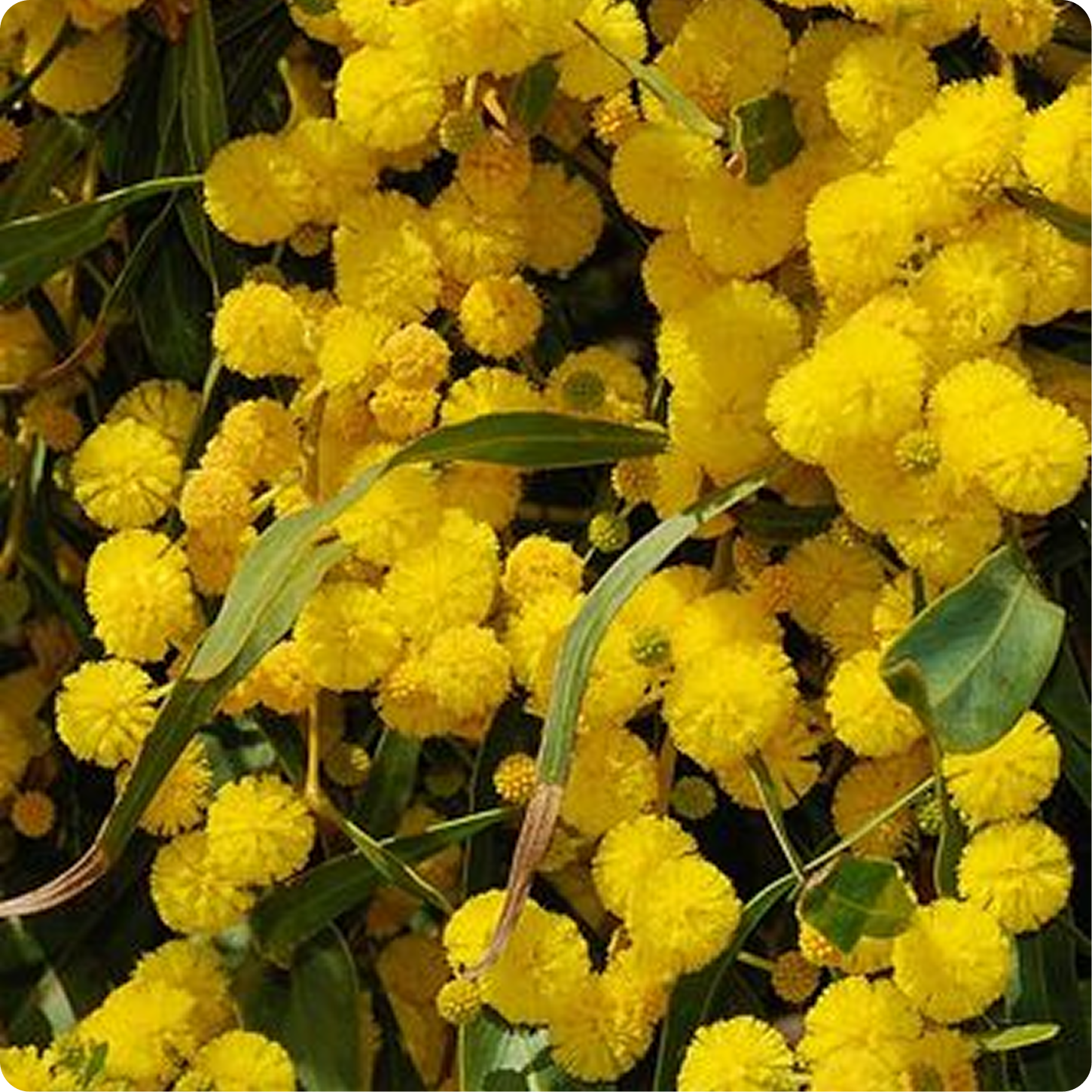
Profuse yellow flowers cover Acacia burkittii in winter through to spring and it can be grown in a wide variety of soils. It has thin long phyllodes (leaves) which give it a wispy look.


A rounded, bushy shrub growing up to 3 metres. Masses of yellow flowers in spring and long seed pods that resemble a string of beads.
Fast growing, very hardy once established and provides great habitat and food for birds and pollinators. Ideal for screening and inclusion in a habitat corridor.


Acacia brumalis is a hardy, attractive acacia growing up to 3 metres. It produces dense foliage that offers shelter for birds and small wildlife, while providing masses of yellow flowers in winter and spring for bees and butterflies. Well-suited to many soil types, thrives in full sun and is drought tolerant once established.
A low maintenance, small bushy shrub perfect for native gardens, wind breaks and habitat.


River Saltbush (Atriplex amnicola) thrives in harsh environments, with spear-shaped leaves and high tolerance for salinity and waterlogging, ideal for landscapes facing tough conditions. Grows to 1.5 metres.
Commonly mixed with other saltbush types to promote biodiversity and support ecological restoration, proving invaluable for both agriculture and conservation efforts.


Acacia hemiteles, commonly know as the Tan wattle is a 2 metre tall multi-branched shrub with lovely long green grey leaves. With lots of brown flower buds in late winter which open into yellow balls, followed by curly seed pods. The local birds and insects love this shrub! Fast growing and perfect for diversity on your property.
Showing 33/33
Our community @wildbosky