Bird & Bee Attracting
🐝 Bird & Bee Attracting 🦜
Bring your garden to life (literally). These native beauties are irresistible to local birds, bees and butterflies — perfect for creating a buzzing little ecosystem out back.
73 products
Sort by:
73 products


Melaleuca cardiophylla, also known as Tangling Melaleuca, is a charming and resilient WA native shrub that brings year-round interest to any garden. With its slightly prickly, heart shaped foliage and profusion of creamy white flowers in spring and summer, it creates a visual display while attracting birds, bees and beneficial insects.
Naturally suited to sandy and gravely soils, this hardy species thrives in full sun and tolerates drought, coastal conditions, and light frosts. It is a dense, spreading shrub growing to 2m.
Perfect for native gardens, screening, hedging and habitat for local fauna.


Eucalyptus utilis, commonly known as Coastal moort, is a small, hardy mallee growing from 2-6m. It has a short trunk, branches with a spreading habit, smooth grey bark that peels off in ribbons revealing pale coppery bark beneath.
In late spring to summer it produces creamy white flowers that attract birds, bees and other pollinators. Adult leaves are thick, a shade of glossy olive green on both sides, egg-shaped to lance-shaped.
Eucalyptus utilis is highly tolerant of coastal winds, poor sandy soils, and drought, making it an ideal choice for coastal gardens, shelterbelts, wind breaks and habitat corridors.


Eucalyptus crucis, commonly known as silver mallee, is a stunning and resilient small tree or multi-stemmed mallee that brings both beauty and hardiness to your property. With striking silver-blue foliage and reddish 'minnirichi' bark which curls exposing green bark underneath, adding a distinctive, ornamental touch. It's aromatic leaves, graceful form and large creamy/yellow flowers attract birds and pollinators enhancing biodiversity.
Only growing up to 8 metres it can be grown in any sized garden.


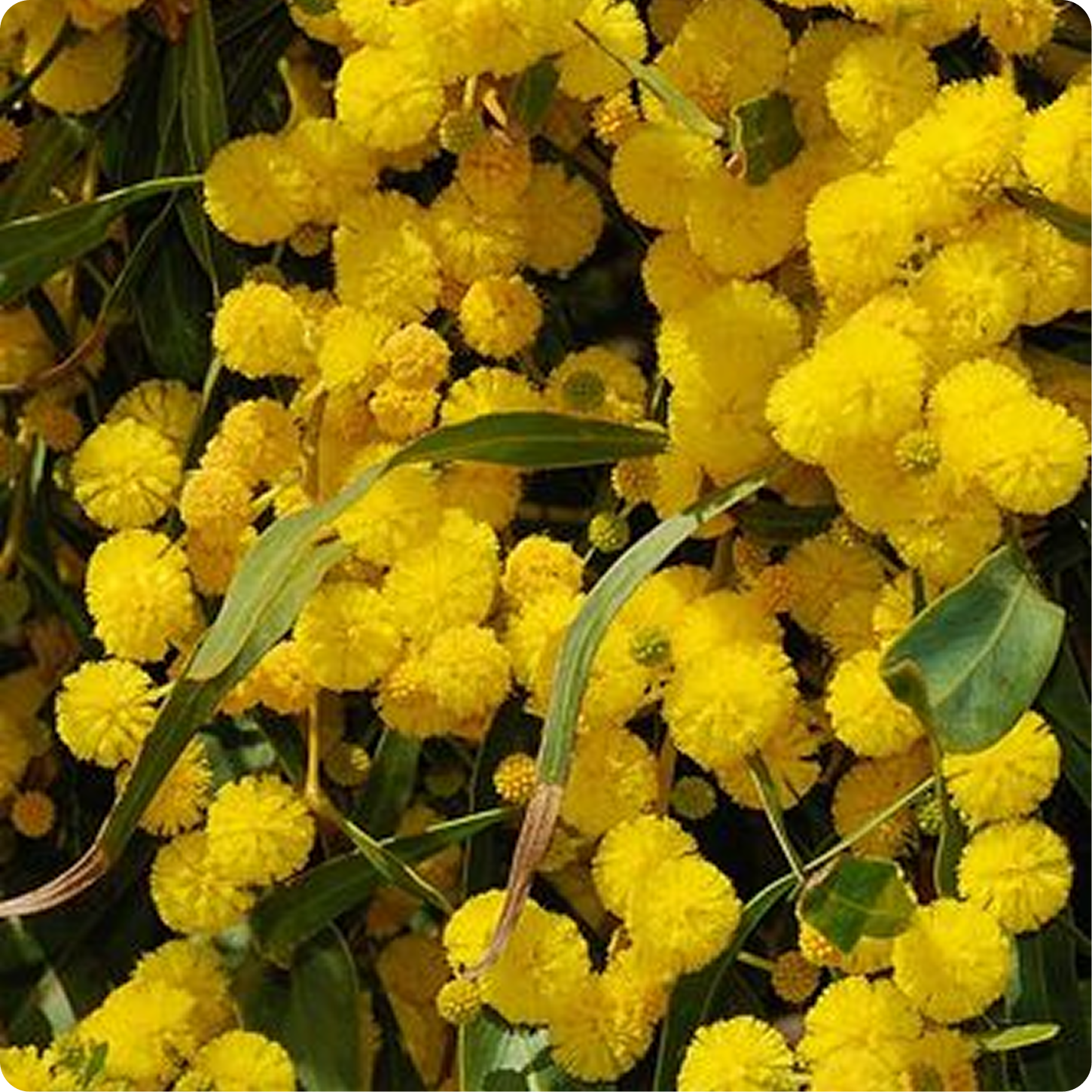
Acacia cyclops, commonly known as coastal wattle or red-eyed wattle, is a hardy dome shaped shrub mostly found in coastal regions. It usually grows to a height of 4 metres but can get taller.
Its easily recognised by its bright yellow flowers, which are produced over a long time, from winter up until summer, and distinctive seed pods filled with seeds surrounded by a fleshy red aril - hence the name 'red-eyed'.
Acacia cyclops loves Perth sandy soils, where it is valued for its resilience and ability to improve soil fertility through nitrogen fixation.


Melaleuca hamulosa known as the "Creekline Honey Myrtle," is a shrub or small tree growing to usually 5 metres, with lance-shaped leaves and white bottlebrush-like flowers. It attracts pollinators like bees and birds.
This plant serves various purposes, including ecological roles such as providing habitat and food for wildlife, and ornamental use in landscaping and screening. It aids in land rehabilitation and erosion control, particularly in areas prone to erosion.
It thrives in wetter environments, like creek lines and swampy areas. Adaptable to various soil types, it contributes to soil health and stability.


10 Perth local native plants
This mix includes 10 native WA species that grow between 1 and 3 metres tall. It’s ideal for creating habitat, shelter and food for birds and insects, also rewilding your garden. The selection supports local birds, bees, and other pollinators.
What’s included:
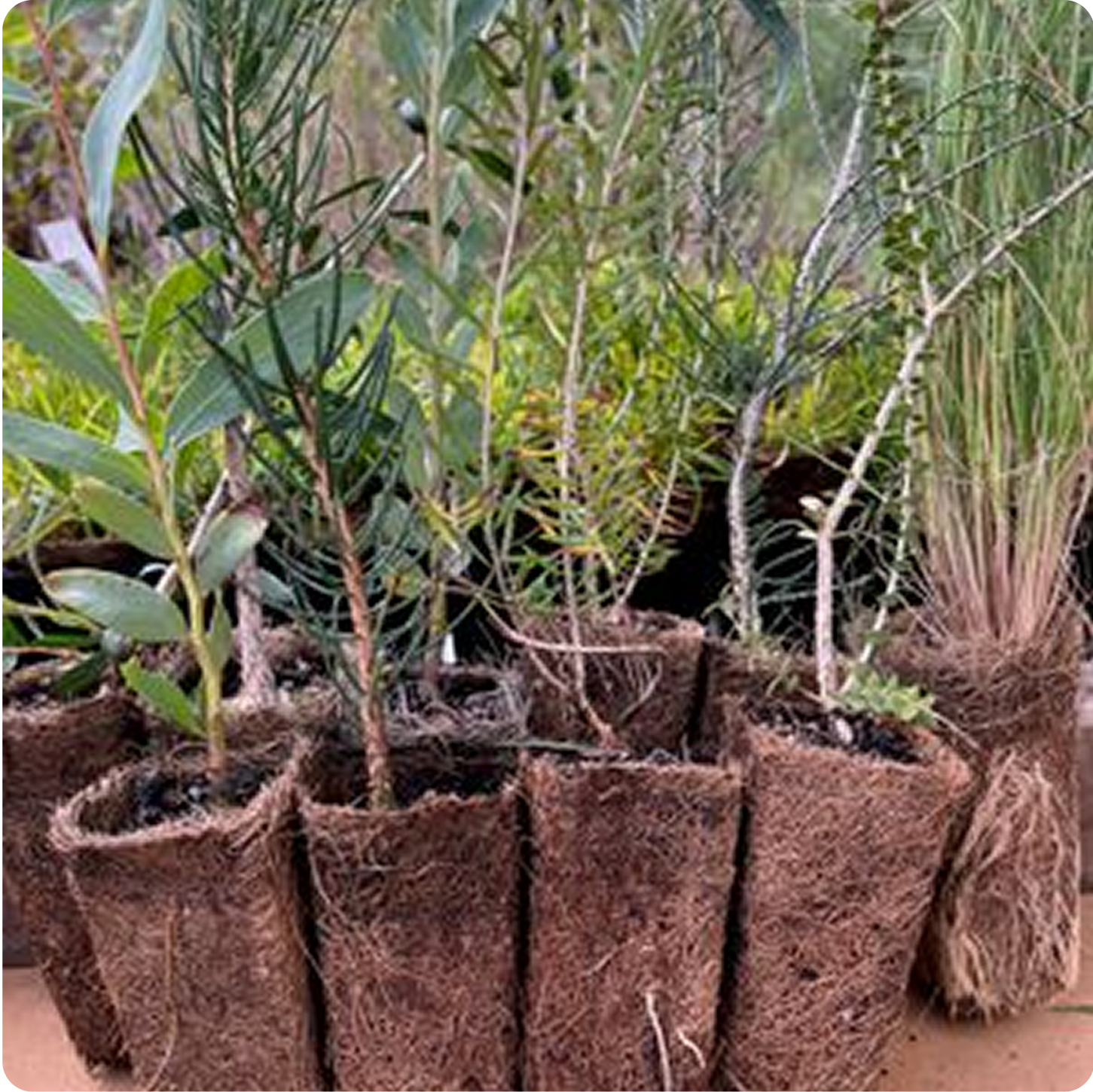
- 10 plants, grown in biodegradable coir pots (ready to be planted)
- Most species are native to the Perth hills & surrounds
- Plants are suited to local soils and dry summers
- Selected for habitat value, resilience, and varied flowering seasons
Why native plants?
Local natives need less water once established, less fertiliser, and help restore ecological balance. They’re a low-maintenance way to build biodiversity into your space.
What varieties are included?
Melaleuca radula (graceful honey myrtle), Melaleuca lateritia (robin redbreast), Melaleuca diosmifolia (green honey myrtle), Kunzea baxteri (crimson kunzea), Kunzea recurva (purple kunzea), Acacia celastrifolia (grey myrtle wattle), Acacia brumalis, Acacia trigonophylla, Acacia hemiteles, Calothamnus gilesii, Calothamnus rupestris (mouse ears), Atriplex semibaccata (creeping saltbush), Eremaea pauciflora (orange eremaea), Hypocalymma angustifolium (white myrtle), Enchylaena tomentosa (barrier saltbush)


Casuarina obesa, or Swamp She-oak, is renowned for its resilience, thrives in various soil types and winter wet conditions, it features slender, weeping branchlets that resemble pine needles, while it's true leaves are reduced to tiny scales arranged in rings along the branchlets. Typically grows from 2 - 8 metres.
Ideal for screening and windbreaks, its adaptability to both drought and flooding makes it a reliable choice for challenging environments. It develops a dense, graceful habit that provides excellent habitat and shelter for wildlife.
Its rough, fissured bark and scale-like leaves provide a striking visual appeal, and whispering in the wind, while its small woody cones add a touch of nature's charm.


Discover the Sand Wattle Myrtle (Melaleuca thymoides), known for its creamy yellow brush flowers and resilient nature. Growing from 1-2 metres it will fit into most gardens. Flourishing in the Perth hills area, this low shrub is a testament to both beauty and endurance, with its lance-shaped aromatic leaves and distinctive branches bringing a unique charm to landscapes.
It thrives in diverse conditions, from sandy soils to wet depressions, making it a versatile addition to eco-conscious landscapes. By integrating the Sand Wattle Myrtle into your garden, you're aiding local wildlife and contributing to conservation efforts.
As it flourishes, your outdoor area becomes a haven for birds and insects, enriching your connection with nature.


The Sandhill Honey Myrtle, or Melaleuca adnata, is an embodiment of resilience and natural beauty, integral to the Australian environment. Flowers bloom in stunning shades from creamy-white to yellowish, drawing in bees and birds, creating a vibrant ecosystem. This plant is a master of adaptation, thriving in various landscapes, serving as a natural barrier against wind and erosion with its diverse growth from a lush shrub to a small tree.
This species is crucial for soil stability and wildlife sanctuary, enhancing your space's ecological value.


Calothamnus rupestris, commonly known as mouse ears, grows in the Perth area and is adapted for our conditions. It has claw-like red flower clusters which bloom from spring to summer.
It's unique form and vivid flowers make it perfect for our native gardens, while providing protective habitat and supporting local biodiversity by attracting birds and insects.
Mouse ears is a spreading shrub growing up to 4m, loves rocky outcrops and hillsides.

Commonly known as Hummock Honey Myrtle, Melaleuca eleuterostachya is a medium shrub growing to 3 metres with arching branches, fibrous bark, narrow leaves and white brush-like flowers which occur through-out the year.


Melaleuca elliptica , also known as Granite Bottlebrush, is a neat hardy shrub that grows to 4m with showy bright red flower brushes starting in winter, and lasting for many months.
It has papery bark and ever green egg shaped foliage and is a great addition to your native garden. Its red flowers attract birds and pollinators, bringing life and colour into your space.


Showing 73/73
Our community @wildbosky