Shade Tolerant
Not every plant loves full sun — these native champions are made for dappled light, understory spots and shady corners. Great under trees or on the south side of the house.
18 products
Sort by:
18 products


Hypocalymma angustifolium, or white myrtle is a multi-stemmed, fine leaved dense shrub growing up to 1.5 metres. It should be positioned in a part shade location protected from sun and wind.
It has prolific white or pink flowers along it's stems from June to October, attracting birds and bees.
It naturally found from Geraldton across the south west corner to Albany, in sandy, clayey, peaty soils, and can be in a winter wet area.

Melaleuca pauciflora is a dense, impenetrable, bushy rounded shrub growing to 1.5 metres.
It grows along the coast from Geraldton to Esperance in a range soils including winter-wet areas, it's also shade tolerant.
It has profuse small white flowers from Summer into Autumn which attract pollinators and birds. It's dense nature makes it great habitat.

Grevillea 'Gin Gin Gem' is a hardy, fast-growing shrub that is a ground cover, 1 metre high but has a spread of 3 metres. It prefers a sunny position but can tolerate shade also.
'Gin Gin Gem' has a long flowering time, from Winter through to Spring, with lots of small red spider-like flowers, which are highly attractive to nectar feeding birds.


Discover the Mallee Saltbush (Rhagodia preissii), an Australian native that thrives in the most challenging conditions. Its dense growth and soft, gray-green leaves make it ideal for ground cover or low hedges, adapting well to various soil types.
Blooming with subtle white to pale green flowers from late spring to summer. Its sprawling form, growing approximately 1 to 2 meters tall and wide, enriches your garden with a lush, natural look.
Its berries attract local birds, while its drought tolerance ensures sustainability. With minimal water needs, it fits into a water wise garden


A perennial (grows back for several years) native grass reaching 60cm tall. Lovely long leaves and purple seed heads flowering often. Native grasses are an important part of the food chain for native animals and insects, they provide direct food, shelter, life cycle support and host plants.
If one grass sets seed, more grasses will grow every year.

Old Man Saltbush, Atriplex nummularia, is a dense, sprawling shrub with large attractive silver foliage. It is the largest species of Australian saltbush growing up to 2 metres high and 3 metres wide, perfect for screening and habitat. It has a extensive deep root system which stabilises sandy soils, but can tolerate many soil types.
It naturally occurs in arid areas in all states of Australia (except Tasmania), so is very hardy and tolerant of most conditions once established.
It can be pruned to keep in shape, must have free draining soils and is part-shade tolerant.


Acacia stenoptera, narrow winged wattle, is a very common Acacia seen around the south-west corner of WA, from Geraldton down to Albany. It is a scrambling, sprawling and prickly shrub reaching 1m. It is an understory plant.
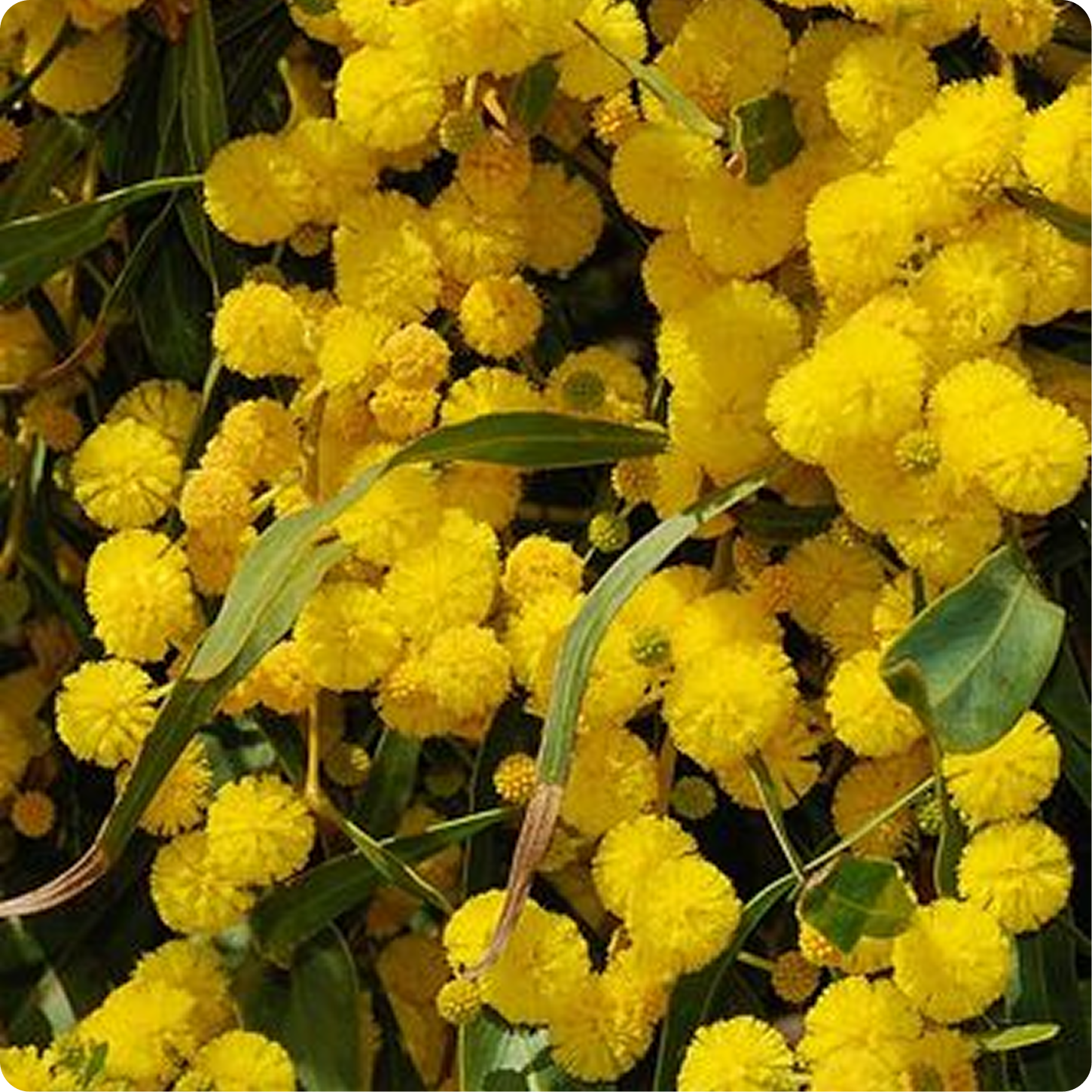
This acacia has ridged stems and curved spine tipped phyllodes that form a wing along the stems. This provides great habitat for many birds and insects. It has creamy yellow flowers from March to December.


Banksia nivea, or Honeypot Dryandra, is a rounded, many branched shrub reaching 1 metre dome. It has long leaves with triangular lobes along the mid vein, a classic Banksia look, but the most striking part of this Banksia is its flowers. They are described as heads of cream-coloured and orange or red flowers, with many forming on every shrub.
Flowering starts between Autumn and Spring, and are highly attractive to nectar feeding birds. Prefers full sun but can tolerate part-shade.
Found from Geraldton down to Esperance.


A coastal saltbush that can handle the salty sea air and sandy soils. It has large grey silvery foliage and grows to 1 metre high and wide.
It grows along the WA coast line from Carnarvon down around to Esperance, stabilising sand dunes along the way.


Astartea scoparia is found growing from Lancelin down to Albany in sandy, loamy soils. It's also found along winter wet depressions, watercourses and granite outcrops.
It grows as a small open shrub with a weeping arching branches, from 1-2 metres. It becomes covered in small white, wax-like flowers in Spring which last for months, also attracts bees and butterflies. It has deep evergreen fine, feathery aromatic foliage giving it an elegant form.


Kennedia prostrata, or running postman, is a prostrate, scrambling groundcover known for it's vivid scarlet-red pea flowers which are on display from winter through to spring, and the fruit is a flattened cylindrical pod.
The plant features soft green, trifoliate leaves and long trailing stems that can spread several metres, making it ideal for covering banks, suppressing weeds, or cascading over retaining walls.
Adaptable to a range of well-draining soils, Kennedia prostrata is shade-tolerant and is found from Geraldton to Esperance.


Hakea varia, varied-leaved Hakea, is a striking dense shrub known for it's naturally varied foliage, it develops dense, prickly branches covered in leave that can range from needle-like to broader lobed forms. It grows 1-3 metres and because of it's prickly character it makes great habitat for birds and insects.
During winter and spring, clusters of small cream flowers appear along the stems, attracting birds and bees.
It has a wide natural distribution from Geraldton to Esperance, likes sand, clay, loam and gravelly soils, and also winter wet situations. Shade tolerant.


Beyond its beauty, the Tall Saltbush offers a feast for honeyeaters with its red berries.
Perfect for under-canopy growth, the Tall Saltbush shows remarkable adaptability. It flourishes beneath taller trees. This low-maintenance shrub is well-suited to erosion control, habitat restoration, low-water landscaping while supporting local wildlife.

Templetonia retusa, or cockies tongues, is a multi-branched rounded shrub with grey green leaves and an up right habit, growing to 2 metres. It has large red pea-like flowers over a long time, seen in winter through to spring.
Templetonia retusa is an attractive and hardy plant that grows in a wide range of soil types along the coast line from Shark Bay into South Australia, including the Perth area.


Acacia aphylla is a widely branched shrub, with no leaves (phyllodes) which gives it a complex and interesting appearance. Growing up to 2 metres and creating excellent habitat with it's multi-branched, prickly habit.
It flowers in winter and becomes covered in yellow ball flowers, supporting local pollinators.
It is threatened in the wild where it naturally grows around the Perth hills area.


Beaufortia squarrosa, or sand beaufortia, is a dense shrub growing up to 2 metres. It small, aromatic leaves are crowded and arranged as four neat rows along it's stems.
Its spherical, brush-like flowers are usually bright red but sometimes orange or yellow, mostly appear in spring. It is naturally occurs in the Perth region from Jurien bay down to Bunbury.
Beaufortia squarrosa is a hardy drought tolerant shrub that prefers full or part sun, sandy soils and can live in winter wet depressions.


Add a splash of colour to your garden with the Tall Labichea (Labichea lanceolata). This upright, open shrub boasts yellow flowers with red or orange markings, creating a vibrant display in late winter to early spring. Its slender, arching branches and bright green, lanceolate leaves provide habitat and shelter for insects.
The Tall Labichea excels in erosion control, thanks to its strong root system and adaptable growth habit. Perfect for a variety of soil textures, from sandy to loamy, this plant thrives in well-drained soils and likes full and part sun. Its robust nature makes it a valuable addition to bush gardens, slopes, and restoration projects.


Leptospermopsis erubescens, commonly known as the Roadside Teatree, is a shrub that usually grows to 2-3 metres. It has small egg shaped leaves and is covered in small white or pink flowers from late winter through spring.
It grows widespread over the whole southern west corner of WA, from Geraldton, Coolgardie and Esperance. It is drought tolerant, grows in various soil types , full sun and part shade.
Our community @wildbosky