Products
96 products
Sort by:
96 products


Eucalyptus erythrocorys, commonly known as red-capped gum, or illyarrie, is a striking small tree, growing from 4-8 metres, known for it's red caps and bright yellow flowers seen from late summer through to autumn.
Eucalyptus erythrocorys is popular in Perth gardens and hills properties because of it's ornamental features and ability to attract birds and other pollinators. It loves well-drained soils and sunny positions.


River Saltbush (Atriplex amnicola) thrives in harsh environments, with spear-shaped leaves and high tolerance for salinity and waterlogging, ideal for landscapes facing tough conditions. Grows to 1.5 metres.
Commonly mixed with other saltbush types to promote biodiversity and support ecological restoration, proving invaluable for both agriculture and conservation efforts.


Leptospermopsis erubescens, commonly known as the Roadside Teatree, is a shrub that usually grows to 2-3 metres. It has small egg shaped leaves and is covered in small white or pink flowers from late winter through spring.
It grows widespread over the whole southern west corner of WA, from Geraldton, Coolgardie and Esperance. It is drought tolerant, grows in various soil types , full sun and part shade.


Erect, compact shrub growing to 2.5 metres, the Robin redbreast bush, or Melaleuca lateritia, has soft, narrow green foliage and thrives in sandy well-drained soils. Admired for its reddish orange bottlebrush flowers that bloom from spring through summer, which often attract nectar-loving birds like honeyeaters.
It grows in the Perth area and surrounds, is low maintenance and drought tolerant once established. Great for habitat, attracting pollinators and all local gardens.


Allocasuarina huegeliana commonly known as rock she-oak is a graceful and hardy WA native, reaching heights of 4-10 metres. It features fine, dark green needle-like branchlets and a narrow, upright form making it well-suited for screening, wind breaks, habitat corridors, shelterbelts and planting into a dry landscape.
This species is drought tolerant, once established, and thrives in sandy or gravelly soils, including rocky outcrops. Its dense canopy provides valuable habitat and nesting sites for birds, while its deep roots help stabilise soil and prevent erosion.
She-oaks make a wonderful wispy sound when the wind blows through their foliage.


Bring bold beauty to your garden with Eucalyptus rhodantha, the stunning Rose Mallee known for it's large, deep pink to red flowers and silvery, round foliage and large seed pods. This rare and eye catching native is perfect for making a statement, attracting birds and pollinators while thriving in dry, well-drained soils.
Its compact size (growing up to 4m) and drought tolerance make it ideal for modern, low-maintenance landscapes. Add a touch of the extraordinary with Eucalyptus rhodantha - a showstopper in any garden.


Melaleuca lanceolata, commonly known as Rottnest Teatree, is a hardy, long-lives large shrub or small tree valued for its adaptability and attractive features. It typically grows from 3-8 metres, with dense, dark green foliage and papery bark. In summer, it produces masses of creamy white, bottlebrush-like flowers that attract bees, butterflies, and other pollinators.
Highly tolerant of coastal winds, salt spray, drought, and poor soils, Melaleuca lanceolata is ideal for windbreaks, screening and habitat planting, providing excellent shelter with a dense canopy for native wildlife.


Kennedia prostrata, or running postman, is a prostrate, scrambling groundcover known for it's vivid scarlet-red pea flowers which are on display from winter through to spring, and the fruit is a flattened cylindrical pod.
The plant features soft green, trifoliate leaves and long trailing stems that can spread several metres, making it ideal for covering banks, suppressing weeds, or cascading over retaining walls.
Adaptable to a range of well-draining soils, Kennedia prostrata is shade-tolerant and is found from Geraldton to Esperance.


Introducing the Salt Lake Honey Myrtle (Melaleuca thyoides), its evergreen interesting scale-like leaves and brush flowers, ranging from cream to yellow and occasionally pink. Ideal for screening, habitat and food for local birds and adds diversity to rewilding on your property.
Beyond its aesthetic appeal, the Salt Lake Honey Myrtle symbolises resilience. It thrives under diverse conditions, from coastal environments to inland heat, showing remarkable drought and frost tolerance. This plant's ability to stabilise sandy soils makes it a key player in landscape design, ensuring a verdant sanctuary in all weather.
Its foliage shelters numerous bird and insect species, enriching your garden with vibrant wildlife.


Melaleuca cuticularis, also known as the saltwater paperbark, is a hardy and attractive small tree (7 metres) ideal for wet or saline environments, but also thrives in sandy clay, loamy clay and clay soils. It grows along our coast line from Perth around to Esperance.
With its distinctive white papery bark, lush green foliage and creamy white bottlebrush flowers, it adds beauty and function to landscapes.
Saltwater Paperbark is perfect for eco-friendly gardening, requiring little water and minimal care. Adaptable to both sunny and shaded areas, it helps maintain ecological balance by fostering local ecosystems. This versatile shrub offers both aesthetic appeal and functional benefits, making it a superb choice for sustainable landscapes.


Beaufortia squarrosa, or sand beaufortia, is a dense shrub growing up to 2 metres. It small, aromatic leaves are crowded and arranged as four neat rows along it's stems.
Its spherical, brush-like flowers are usually bright red but sometimes orange or yellow, mostly appear in spring. It is naturally occurs in the Perth region from Jurien bay down to Bunbury.
Beaufortia squarrosa is a hardy drought tolerant shrub that prefers full or part sun, sandy soils and can live in winter wet depressions.


Discover the Sand Wattle Myrtle (Melaleuca thymoides), known for its creamy yellow brush flowers and resilient nature. Growing from 1-2 metres it will fit into most gardens. Flourishing in the Perth hills area, this low shrub is a testament to both beauty and endurance, with its lance-shaped aromatic leaves and distinctive branches bringing a unique charm to landscapes.
It thrives in diverse conditions, from sandy soils to wet depressions, making it a versatile addition to eco-conscious landscapes. By integrating the Sand Wattle Myrtle into your garden, you're aiding local wildlife and contributing to conservation efforts.
As it flourishes, your outdoor area becomes a haven for birds and insects, enriching your connection with nature.


The Sandhill Honey Myrtle, or Melaleuca adnata, is an embodiment of resilience and natural beauty, integral to the local environment. Flowers bloom in shades from creamy-white to yellowish, drawing in bees and birds, creating a vibrant ecosystem. This plant is a master of adaptation, thriving in various landscapes, serving as a natural barrier against wind and erosion with its diverse growth from a lush shrub to a small tree.
This species is crucial for soil stability and wildlife sanctuary, enhancing your space's ecological value.


Medium multi-branched shrub or a small tree growing to 4 metres. A resilient, drought tolerant Acacia that is great for screening, supporting pollinators and inclusion in a habitat corridor.
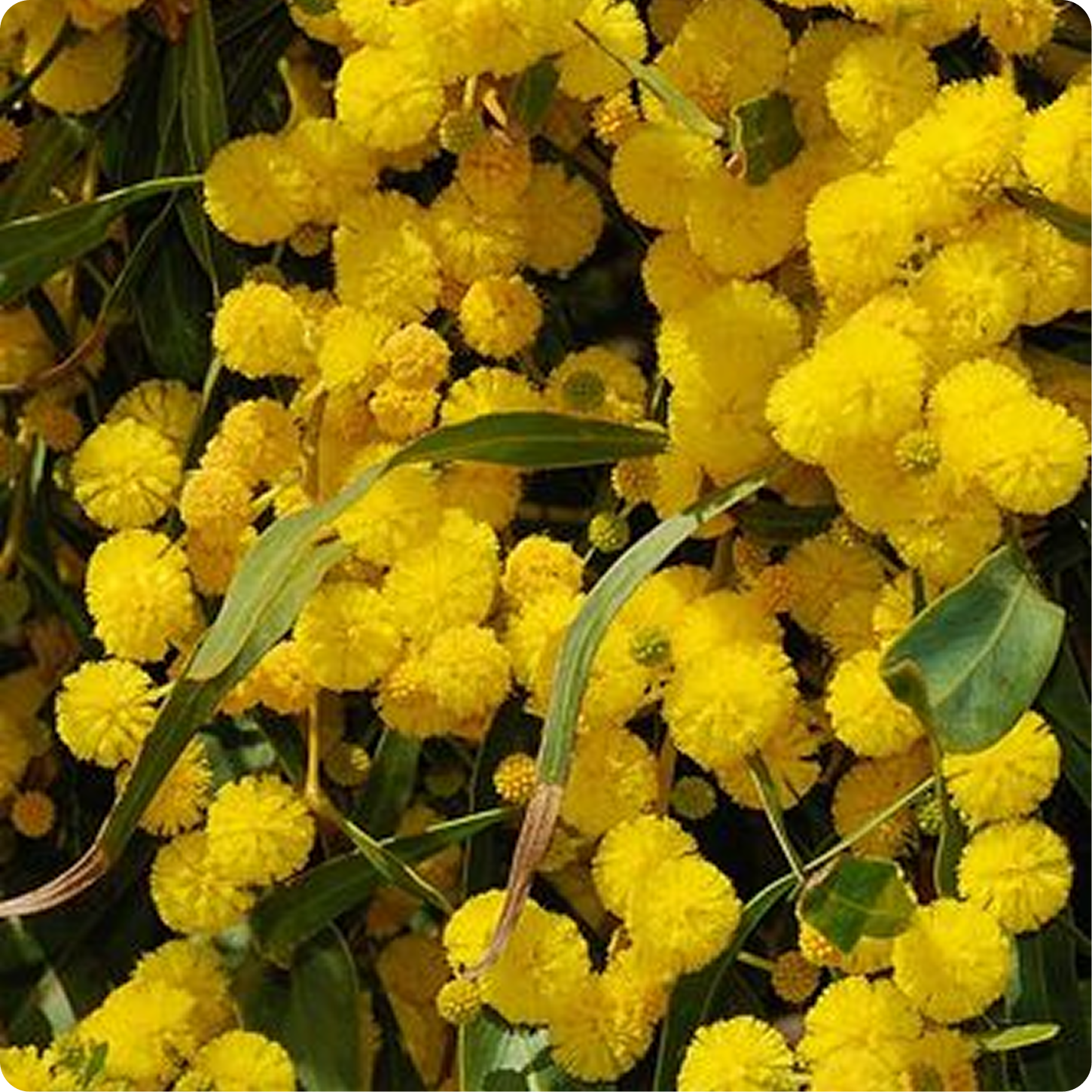
Profuse yellow flowers cover Acacia burkittii in winter through to spring and it can be grown in a wide variety of soils. It has thin long phyllodes (leaves) which give it a wispy look.


Acacia denticulosa, or Sandpaper wattle, because of it's slightly twisted, sandpaper-like textured foliage. It is also known for its yellow flowers, which are many small flowers arranged in a curved rod-like inflorescence about 6cm long. Flowering occurs in spring, (even after the first year of growing),which attract pollinators such as bees, butterflies and birds to your garden.
It's fast growing up to 3 metres, fixes nitrogen in your soil, tolerates partial shade but prefers full-sun and is drought tolerant.
Acacia denticulosa is an unusual acacia which is threatened in the wild, but with a growing interest from native gardeners it's been seen in local gardens.


Revitalise your garden with the Scarlet Honey Myrtle (Melaleuca fulgens), a stunning fast growing small shrub that offers vibrant scarlet blooms. Growing up to 2 metres. Its bushy, rounded form is a canvas for red flowers that captivate and welcome diverse wildlife. It complements any garden theme, flourishing in spring and early summer and occasionally surprising with year round blooms.
It prospers in well-drained soils, is drought-resistant once established.
It attracts nectar-feeding birds and beneficial insects, enhancing local biodiversity. Ideal for feature planting, screening, or adding bursts of colour, the Scarlet Honey Myrtle is perfect in creating a lively, eco-friendly garden atmosphere.


10 Perth local native plants
This selection includes 10 native species that mature between 2 and 8 metres, ideal for creating privacy screening, windbreaks, or habitat corridors along property edges. The diverse mix supports local wildlife, including birds and pollinators, enhancing your garden's biodiversity.
What's included:
- 10 plants grown in biodegradable coir pots (ready for planting)
- Species native to the Perth & surrounding region
- Plants suited to local soils and dry summers
- Varied foliage and heights creating diverse corridor
Why choose native plants? Native species are well-adapted to local conditions, requiring less water and maintenance.They provide essential habitat and food sources for native fauna, contributing to a healthier ecosystem.
What plants are included?
Melaleuca elliptica (granite bottlebrush), Acacia meisneri (blue wattle), Melaleuca adnata (sandhill honey myrtle), Melaleuca viminea (mohan), Acacia acuminata (raspberry jam), Acacia microbotrya (manna wattle), Kunzea baxteri (crimson kunzea), Hakea petiolaris (sea urchin hakea), Casuarina obesa (swamp sheoak), Allocasuarina huegeliana (rock sheoak), Eucalyptus drummondii (drummonds gum), Eucalyptus erythrocorys (Illyarrie), Callistemon phoeniceus (lesser bottlebrush), Calothamnus rupestris (mouse ears)


Hakea petiolaris, or sea-urchin hakea, is a commonly seen hakea in the Perth hills bushland. It is a distinctive small tree (6m) with board leaves, open branches, woody seed pods and large pink/purple sea urchin-like flowers. Flowers mainly in winter to spring attracting pollinators to your garden.
Great addition to you native garden, adding height and texture, while enhancing local biodiversity.


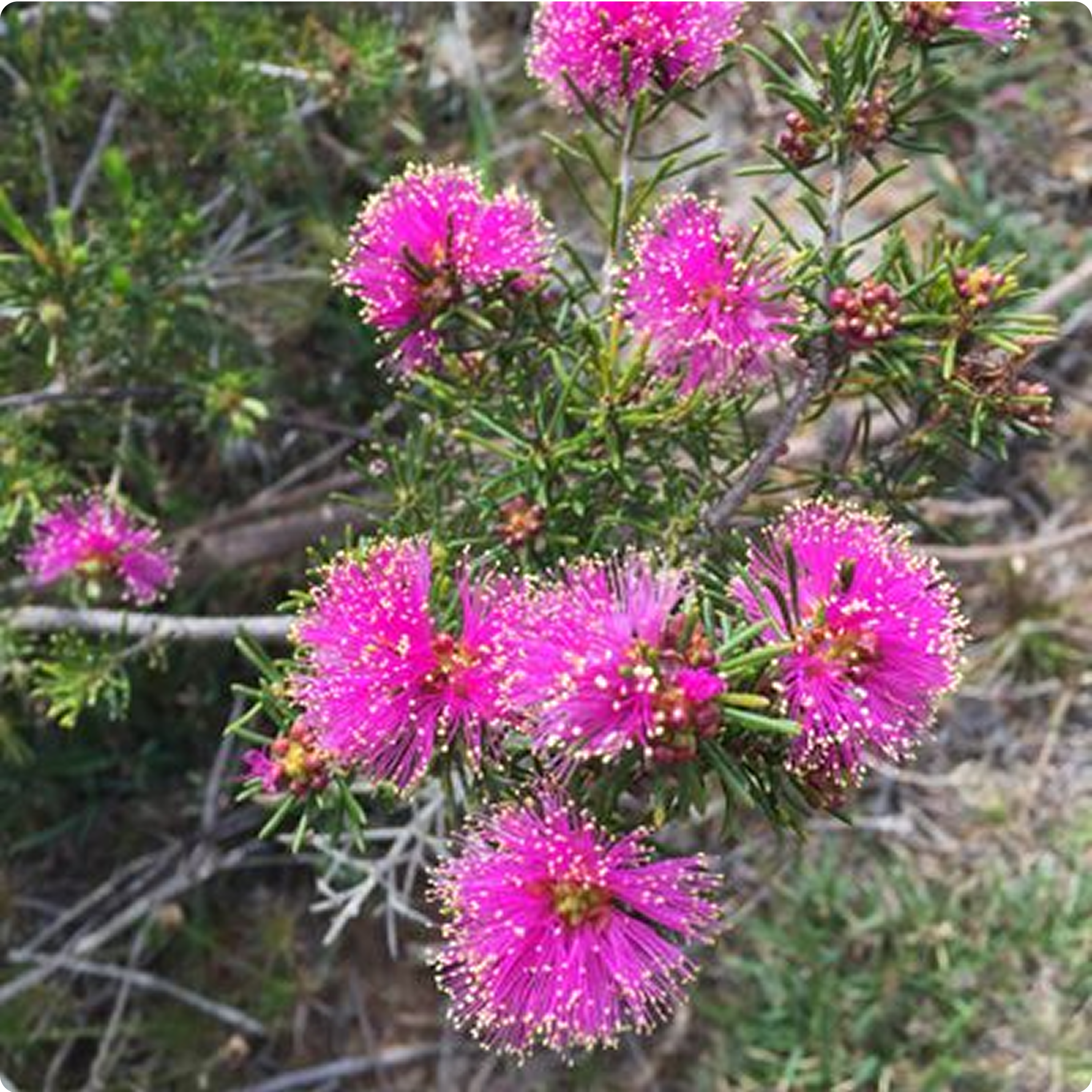
Melaleuca nesophila commonly known as Showy honey-myrtle because of it's long flowering time with beautifully pink to purple pom-pom flowers. Attractive ever-green aromatic foliage growing up to 4 metres.
A native that ticks all the boxes in terms of providing resources for birds and insects, while adding beauty into your garden. The showy honey-myrtle is also used for screening.


Allocasurina campestris is a dense, erect shrub that grows to 1-3 metres. It has similar foliage to other she-oaks but with a more upright character, which makes it an interesting feature in your garden. It grows in gravelly sandy soils so is perfect in a difficult area.
Works well for screening, wind breaks and part of a habitat corridor, providing shelter and resources for native birds and other animals.
Showing 80/96
NextOur community @wildbosky